Realistic Hunting weapons are best chosen by target, distance, ammunition, and current hunting-season restrictions—not by a single universal tier list. The animal roster guide provides the target context behind these choices. Use a scoped rifle for deer, elk, and other large animals that demand deliberate distance shooting; use a shotgun with bird shot for birds; keep a pistol for close-range opportunities; and treat the bow as a season-dependent option. The General Store is the main place to buy or improve weapons, scopes, muzzles, bipods, stocks, and matching ammunition.
The known weapon information does not establish a complete numeric database. Exact prices, damage, recoil, range, compatibility, and level gates can change or remain unlisted, so the current store and equipment panels should settle those details. The practical guide below separates confirmed roles from details that still need an in-game check.
Realistic Hunting weapon roles at a glance
The table is a loadout guide rather than a damage ranking. Choose the row that matches the animal and shot you are actually planning, then verify ammunition and availability in the General Store.
| Weapon or equipment | Best-supported role | Useful pairing | What to check |
|---|---|---|---|
| Scoped rifle | Longer-range precision for deer, elk, and similar large targets | Compatible rifle ammunition and a scope | Current price, level gate, and exact ammunition |
| Wolverine 7 millimeter | A rifle example used for night observation and animal shooting | Thermal scope and hollow points | Exact damage, range, and unlock requirements |
| Grizzly | A later, stronger rifle option for larger or more demanding hunts | Compatible rifle ammunition and suitable optics | Exact stats, price, and unlock level |
| Pistol | Close-range emergency or turkey hunting option | Its matching handgun ammunition | Effective range and current ammunition cost |
| Shotgun | Short-range bird hunting | Bird shot | Range, shell type, and compatible targets |
| Bow | Alternative hunting method when the bow season or rule allows it | Compatible arrows or bow equipment if offered | Current season, model, and arrow requirements |
| Scope | Magnifies distant animals for observation and aiming | A compatible rifle or other weapon | Magnification, compatibility, and current store options |
| Thermal scope | Helps locate animals in night conditions | Wolverine 7 millimeter or another compatible weapon | Compatibility and how its view behaves in the current version |
| Muzzle, bipod, or stock | Weapon attachments listed for performance or handling changes | The compatible firearm | The live panel for each attachment's actual effect |
The rows distinguish equipment that can be named from effects that are not quantified. For example, a thermal scope is useful for finding animals at night, but the evidence does not justify promising a particular magnification or detection distance. Likewise, “stronger” describes the reported Grizzly upgrade path, not a confirmed damage multiplier.
Rifles for deliberate long-range hunts
A scoped rifle is the most flexible evidence-supported choice for deer and elk when the animal is far enough away that a precise, controlled shot matters. A scope supports both observation and aiming, while the rifle gives the player a way to work from a safer distance than a close-range sidearm. The videos also show 30-06 and other scoped hunting-rifle references, but they do not provide a complete catalog of every rifle model.
The Wolverine 7 millimeter is a named rifle example. One loadout pairs it with a thermal scope, and the player buys hollow points for it. That makes it a useful reference for a night-oriented or longer-distance setup, not proof that it is always the best rifle. A higher scope, an 8x scope, and a “good scope” are also mentioned in play, but their exact attributes and weapon compatibility are not fully listed.
The Grizzly appears as a later rifle choice after an upgrade. Treat it as an option to investigate when the store offers it and your level and money allow it. Do not infer a precise unlock level, caliber, damage value, or ranking from the reported switch. For a buying decision, compare the current panel’s price, ammunition, scope compatibility, and stated stats against the role you need.
Long-range equipment does not remove the need for fieldcraft. Wind, noise, concealment, and hit placement still affect whether the animal stays available for a clean harvest. A distant shot can also turn into a costly tracking attempt if the aim is rushed. Scout with Binoculars or an appropriate optic, settle the approach, and fire only when the target and shot are clear.
Shotguns, pistols, and the bow
A shotgun is the clearest bird-hunting pairing in the documented examples. The player obtains a shotgun and bird shot before moving closer to hunt birds. Bird shot should not be treated as interchangeable with rifle ammunition or hollow points; confirm the current shell type in the equipment panel before leaving the store. The evidence supports a short-range bird role, not a universal recommendation for deer or long-distance shooting.
A pistol fills a different niche. In one turkey example, the player chooses a pistol to avoid consuming more rifle ammunition and reports finishing the bird with two heart shots. That demonstrates a close-range turkey use case, not a general rule that every pistol can replace a rifle or shotgun. If the animal is distant, moving, or larger than the example target, choose equipment that the current panel and your hunting plan support instead.
The bow is constrained by season or game rules. The player explicitly notes that bow season is not open and switches to a scoped rifle. This makes season availability the first bow check. The evidence does not confirm a named bow model, arrow catalog, damage values, or a complete seasonal calendar, so do not buy or plan around a bow until the current game state shows it is usable.
These distinctions also help control cost. A rifle can be the wrong tool for a low-value close bird if every unnecessary shot consumes expensive ammunition. Conversely, moving too close to a large animal simply to use a pistol or shotgun can create a harder approach. Match the loadout to the target before the animal is alert.
Compare hunting weapons for each target
These moments support the guide's weapon-role comparisons, including scoped rifles, pistols, shotguns, bird hunting, and bow-season limits.
Scopes and firearm attachments
Scopes are the most clearly described attachment group. A standard scope helps inspect and aim at distance; higher-power optics are mentioned as upgrades; and a thermal scope helps the player find animals at night. The thermal view is not automatically a perfect long-range optic: the player also comments on ordinary magnification and observation limits. Keep Binoculars available when you need to judge an animal before committing to a shot.
Muzzles, bipods, and stocks appear in the General Store equipment flow. Their names establish that they are firearm attachments, but the documented information does not give reliable numerical recoil, sound, stability, or accuracy changes. A bipod should not be promised to reduce a specific percentage of sway, and a muzzle should not be described as silent. Install an attachment only after reading the current item panel and checking that it fits the weapon you carry.
Buy and configure weapon attachments
This moment supports the General Store guidance by showing weapon upgrades and a Wolverine 7 millimeter equipped with a thermal scope, attachments, and hollow points.
A sensible upgrade order is therefore practical rather than numerical:
- Buy the weapon and ammunition that match the next target.
- Add a compatible scope when distance or night visibility is the problem.
- Compare attachment descriptions before spending money on a muzzle, bipod, or stock.
- Replace or upgrade the firearm only when the store shows a meaningful available option and you can afford its ammunition.
This order keeps the purchase tied to a real hunting problem. A better optic cannot correct a bad wind approach, and an attachment cannot make bird shot appropriate for a rifle hunt.
Ammunition and store decisions
Ammunition is a separate cost from the weapon. Rifle hunts can consume substantial supplies, and one reported outing makes the broader point that ammunition spending may exceed the sale value of an animal. Hollow points are shown with the Wolverine 7 millimeter, while bird shot is shown with the shotgun. Rifle ammunition must match the firearm’s caliber; do not assume that a named round transfers across every rifle.
Before leaving the General Store, check four things: the weapon, the ammunition type, the optic or attachment fit, and the money left for the actual outing. If one of those is unclear, use a simpler loadout instead of buying a full upgrade set. The current store panel is authoritative for prices, stock, level requirements, and compatibility.
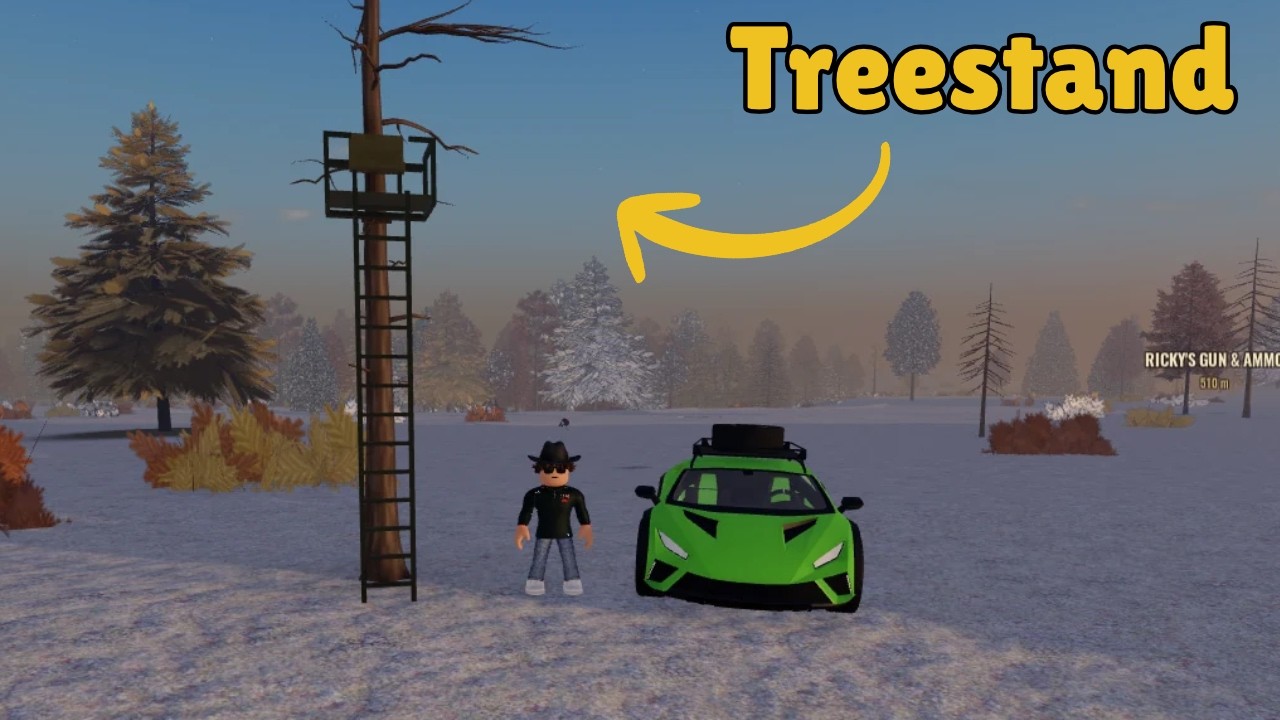
A loadout also interacts with the rest of the hunt. Binoculars or a thermal scope help identify an animal; Calls and a careful approach can create a better angle; Tree Stands and Trail Cameras can support observation; and Tags determine whether the target can be harvested under the current outing rules. The gear guide covers those supporting tools. Weapons complete the shot, but they do not replace tracking, wind management, or legal target selection.
Choosing a weapon in the field
Use this decision order when an animal appears:
- Large animal at distance: start with a scoped rifle and matching rifle ammunition. Confirm the target through Binoculars or the scope before firing.
- Bird at close range: use a shotgun with bird shot when that pairing is available. Move closer carefully rather than trying to force a long shot.
- Close turkey opportunity: a pistol can conserve rifle ammunition, as shown by the two-heart-shot example, but only use that approach when range and aim are favorable.
- Night search: a thermal scope can help locate animals, while the weapon still needs compatible ammunition and a deliberate shot.
- Bow plan: check whether bow season or the current rules permit it before building the loadout.
- Attachment purchase: read the live description for the specific muzzle, bipod, stock, or scope; the names alone do not establish exact performance.
After firing, pause and inspect the result. A fleeing animal is a reason to follow tracks or blood rather than fire repeatedly. Repeated misses waste ammunition and can push the target farther away. If the approach fails because wind or noise exposes you, reposition and resume scouting. A weapon upgrade helps most when it is paired with a better decision about distance, timing, and shot placement.
What the current evidence does not establish
There is no confirmed complete weapon tier list with universal best choices, exact damage, prices, recoil, range, fire rate, level requirements, or upgrade order. Wolverine 7 millimeter, Grizzly, 30-06, 12 gauge, scopes, and attachments are named examples, but the available records do not make every model comparable on one numeric scale. The same caution applies to bow season details, arrow types, thermal behavior, and attachment effects.
For mutable information, open the General Store and equipment panel immediately before a hunt. Use the current compatibility and ammunition prompts as the deciding authority. For a stable strategy, keep the principles that the evidence supports: rifles serve deliberate distance shots, shotguns and bird shot serve the demonstrated bird role, pistols can cover close opportunities, bows depend on season, and every choice still has to respect wind, noise, tracking, tags, and ammunition cost.
First-time Realistic Hunting weapon questions
What is the safest general weapon choice for deer or elk?
Use a scoped rifle with matching rifle ammunition when the animal is at a distance. This role is supported, but the current store should decide the exact rifle, scope, price, and level requirements.
Can a shotgun with bird shot replace a rifle?
No. The supported example pairs shotgun and bird shot with bird hunting at closer range, while scoped rifles are the clearer choice for deer, elk, and other longer-distance targets.
When should I choose the pistol instead of the rifle?
Use the pistol for a favorable close-range opportunity, such as the reported turkey example where two heart shots completed the harvest and conserved rifle ammunition. Do not extend that example into a universal rule for larger or distant animals.
Does a thermal scope guarantee better long-range aim?
No. It can help you find animals at night, but the reported play also notes limits to ordinary magnification and observation. Check the current optic description and use Binoculars or another scope when you need to judge distance and target quality.
What should I check before buying a weapon attachment?
Confirm that the scope, muzzle, bipod, or stock fits your weapon and read its current in-game description. These attachments are named, but no universal numerical effects are confirmed for universal numerical effects for stability, sound, recoil, or accuracy.